


For years, writers were sold the same dream:
Write a manuscript.
Send it to publishers.
Get accepted.
Hope your book succeeds.
And honestly?
That path still works for some people.
But the problem is that most writers think the publisher is the thing that creates success.
It’s not.
The audience is.
Because you can have the best book in the world, but if nobody knows who you are before launch… you’re basically starting from zero every single time.
That’s why you see some creators sell thousands of books instantly while other incredibly talented writers barely sell 100 copies.
Not because their writing is worse.
Because one built an audience first.
And the other waited for permission.
That realization changed everything for me.
I stopped thinking:
“How do I get chosen?”
And started thinking:
“How do I build something people actually care about before I ever sell anything?”
That’s the real game now.
And honestly?
You are not doing it right.
That’s exactly why I want to show you the 4 strategies that helped me grow to 1,500 subscribers with real engagement… so you can have real readers for your book too!
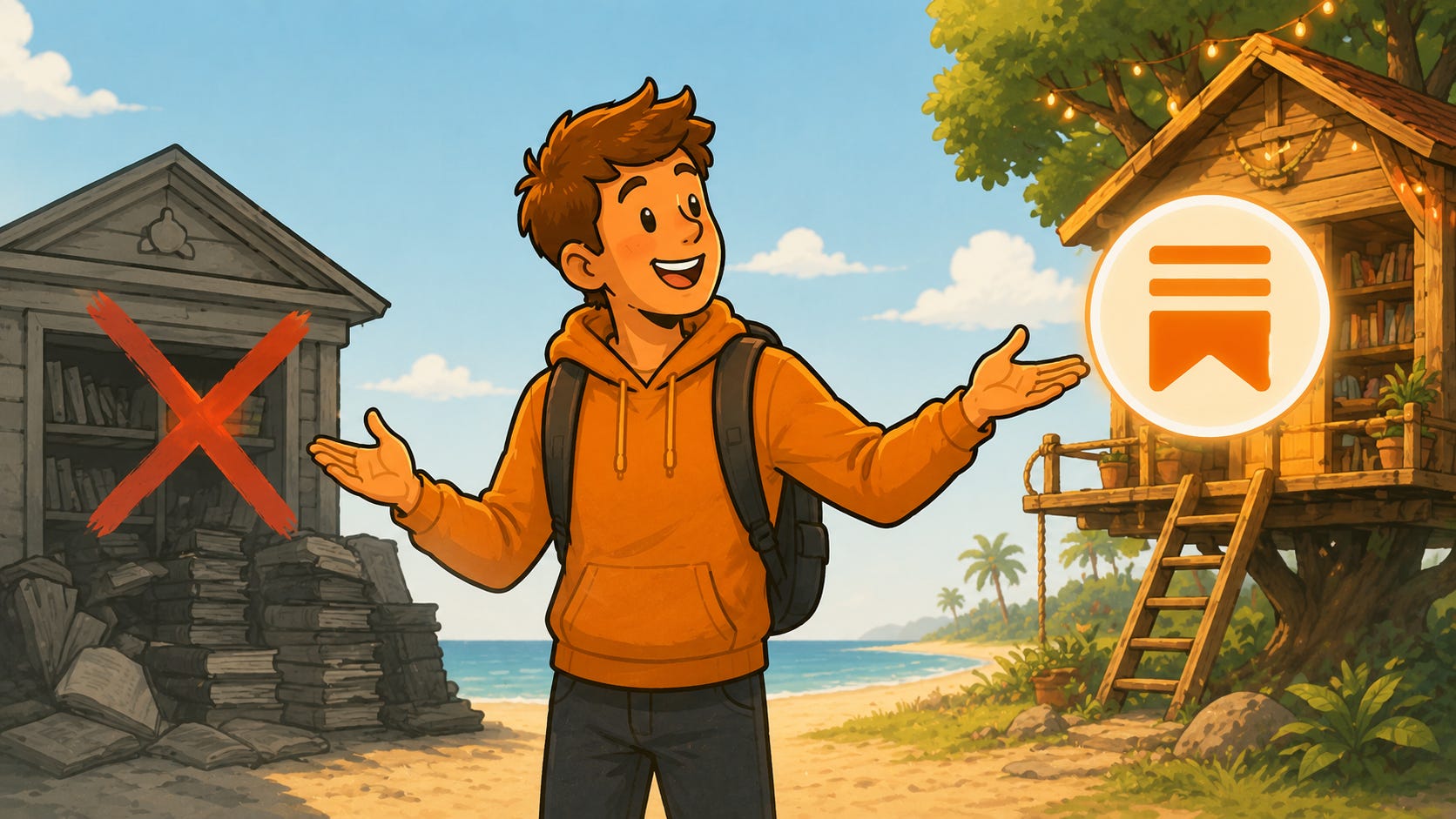
The Real Problem With Traditional Publishing
The biggest issue with publishers is not even the money.
It’s the distance they create between you and your readers.
The publisher owns the distribution.
The marketing.
The relationship.
The visibility.
You become dependent on somebody else to grow your career.
And that’s dangerous.
Because if they stop promoting your work?
You disappear.
Meanwhile, writers with their own audience can:
launch products
sell books
start communities
build memberships
get clients
make money from recommendations
and create opportunities whenever they want.
Why?
Because they own attention.
And attention online is basically modern leverage.
The craziest part is that most writers are trying to build this audience on platforms designed to destroy their focus.
Instagram.
TikTok.
Twitter/X.
You post something.
Someone watches for 1.7 seconds.
Then immediately goes back to watching a raccoon stealing cat food while subway surfers gameplay plays underneath.
Good luck building deep trust in that environment
That’s why I became obsessed with Substack.
Not because it’s “perfect.”
But because it’s one of the few places online where people still show up to actually READ.
Huge difference.
Hey! If you don’t know me, I’m William, a 20-year-old creator who spent months posting into the void before figuring out how to actually grow on Substack 😅
Since then, I’ve grown my newsletter to 1,500+ subscribers, helped 40+ writers improve their growth, built the Growth Lab community, and tested hundreds of growth experiments while juggling school, work, training, and content creation at the same time.
Now I’m documenting everything I’m learning so you can grow faster without wasting months figuring it out alone.
Every Monday, I break down big Substack creators and why they grow. Every Wednesday, I share a practical growth article. And every Friday, we have real conversations inside the community. Subscribe and build with us 🤝
Why I Think Substack Is The Best Place For Writers Right Now
I’ve tested a lot of platforms.
And honestly?
Substack solves a problem most writers don’t even realize they have:
ownership.
When somebody subscribes to your newsletter, you own the connection.
You don’t have to pray an algorithm shows your work to them next week.
You can directly reach them.
That’s powerful.
Especially today when algorithms change every 14 seconds for absolutely no reason
But the other underrated thing about Substack is the environment.
People there EXPECT to read.
That changes behavior completely.
On TikTok, people consume.
On Substack, people connect.
That’s why even small writers can build loyal communities there way faster than on traditional social media.
And once you combine:
email list
community
consistent content
relationship-building
and recommendations...
growth becomes way more predictable.
And here’s how you can start or build the best foundation!
Here’s The 4 Thing I Would Do if I Were You
Honestly?
I’d stop overthinking branding for 3 weeks first
Most writers waste insane amounts of time trying to:
pick the perfect logo
find the perfect niche
rewrite their bio 47 times
choose the perfect color palette
Meanwhile they still haven’t posted anything.
So here’s the actual process I’d follow.
Step 1: Create The Account Fast
Don’t wait until everything looks perfect.
Nobody cares at the beginning.
Create the account.
Add a simple picture.
Write a clear sentence about what you help people with.
Done.
Your first version is supposed to look messy.
(Mine definitely did)
Step 2: Study Writers In Your Niche
This part matters WAY more than people think.
Go search creators in your niche and analyze:
what people comment on
what headlines get engagement
what problems repeat constantly
what readers complain about
what angles feel different
You’re not copying.
You’re researching demand.
Big difference.
Because when you understand what readers already care about, writing becomes much easier.
You stop posting random ideas into the void hoping something works.
Also, you should look at what other writers are offering and how you can be different.
Why?
If your Substack feels like the same of every other Susbtack in your niche, people won’t stay for you, they will take the first thing they see or read.
Join the Newsletter Growth Lab🚀 for FREE and unlock a growing audience of loyal readers in the next 90 days. Include: mini-courses, real growth breakdowns, experiments, and a community of writers building together instead of trying to figure Substack out alone. Free for early members before it becomes paid.
Step 3: Build A Clear Structure
If somebody lands on your page and immediately feels confused…
you lose them.
People need clarity FAST.
Your page should instantly answer:
Who are you?
What do you write about?
Why should they subscribe?
What transformation/problem do you help with?
Simple.
Not:
“I explore the intersection between modern existential curiosity and digital creativity.”
Be direct and clear.
You can use your previous research to let them know 3 things:
Their transformation (from pain to dream outcome)
Your unique solution (how are you different and when your are posting this)
Your story (and proof)
Then, put it in your bio and in your Start Here Post.
That’s how it becomes more clear for your reader!
Step 4: Stop Posting Alone
This one changed everything for me.
A lot of writers publish…
then disappear.
No comments.
No conversations.
No networking.
No engagement.
Then they wonder why nobody notices them.
At the beginning, visibility matters more than perfection.
That’s why commenting helped me so much early on.
I treated comments like mini networking opportunities.
Not fake “great post 🔥” comments.
Real thoughts.
Real questions.
Real conversations.
That’s how readers slowly started discovering my work.
And once you get momentum?
Everything compounds faster.
More readers.
More recommendations.
More replies.
More relationships.
More trust.
Want a real structure?
Use this:
Add value to what they just said (in a Note or a comment)
Ask a question about your niche (are you struggling too with…)
Finish by saying: I would love to connect!
It’s a simple comment that will first help you get answered and secondly make them check out your page.
When they answer, and do struggle with something, help them and if you can share a valauble piece you have.
Chances are they will subscribe!
(and that’s how you can start having real readers for you book!)
The Part Most Writers Don’t Want To Hear
I’ll be honest with you.
If I had to restart from 0 today, I would still focus on building an audience first instead of waiting for some magical publisher to come save me.
Because honestly? Most writers reading this will still stay stuck.
Not because they’re incapable.
But because they’ll consume this article like entertainment instead of execution.
They’ll read it.
Feel motivated for 12 minutes.
Maybe even tell themselves:
“Okay yeah… I should probably start my Substack.”
Then go right back to overthinking:
their niche
their logo
their first post
their banner
or waiting for “the perfect time” to start
Meanwhile another writer with less talent but better systems quietly builds an audience every single week.
Because building online is usually less complicated than people think.
It’s mostly:
visibility
consistency
connection
repetition
That’s it.
And honestly? That’s why building an audience first matters so much.
Because once you own attention and trust, everything becomes easier later:
books
products
clients
opportunities
collaborations
monetization
But here’s the important part:
This article alone is only a small piece of the bigger picture.
Because yes, starting a Substack and building publicly matters a LOT.
But eventually new questions appear:
how do I actually get readers consistently?
how do I build relationships with other writers?
what do I say in DMs without sounding weird?
how do I turn attention into loyal subscribers?
what if people subscribe… but never come back?
how do I stay consistent without burning out?
how do I structure my newsletter so people actually remember it?
That’s where most writers stay stuck.
Because growth on Substack is rarely about one viral strategy.
It’s the system behind it.
The writers growing the fastest right now are usually not the most talented writers.
They’re the writers building the strongest systems.
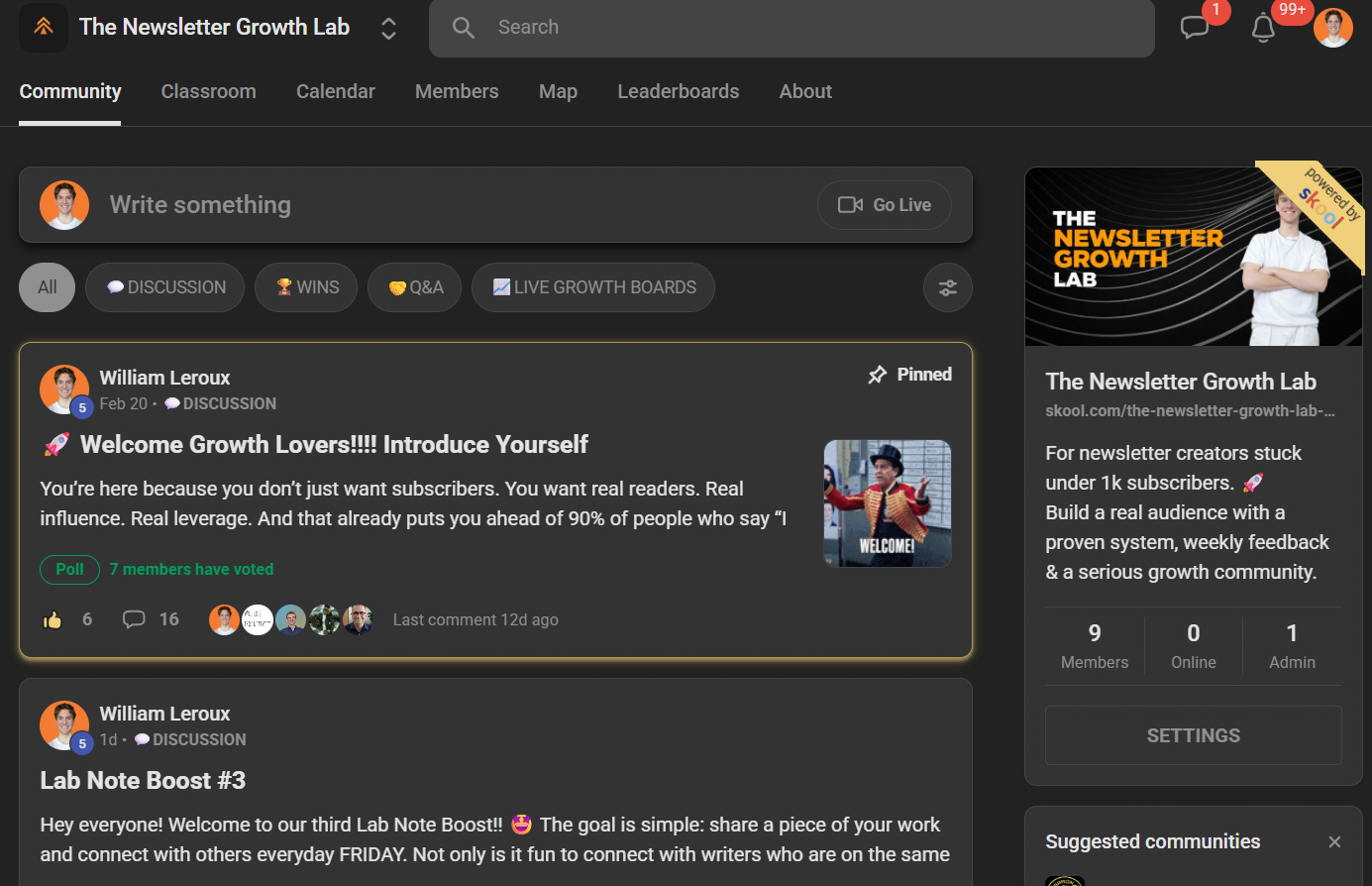
That’s exactly why I created Newsletter Growth Lab.
A FREE community where I share the systems I personally used to grow my Substack while balancing school, sports, work, content creation, and honestly way too much caffeine ☕
Because I genuinely believe more writers should have access to this information instead of trying to figure everything out alone for years.
Inside the community, I break down:
how to grow consistently on Substack
how to get loyal readers instead of ghost subscribers
how to structure your newsletter
how to monetize without sounding salesy
how to use AI without losing your human voice
how to create systems instead of relying on motivation
and how to turn writing into a real long-term opportunity
Not fake “become a millionaire author in 30 days” advice 😭
Real systems.
Real testing.
Real execution.
And I’ve already seen these systems work for other writers too.
One creator inside the community went from around 400 subscribers to over 1,100 subscribers in just a few months while making her first dollar online.
Not because she became a genius overnight.
Because she finally had systems.
That’s the difference.
And honestly? The writers learning these skills now are going to have a huge advantage later.
Because while most people are still waiting for permission to start…
Others are quietly building audiences that compound every single month.
Huge difference.
So if you’re tired of overthinking, posting inconsistently, and trying to figure everything out alone…
Join us. 🔥
Growth Lab is completely free because we genuinely believe everybody should have access to this kind of information.
And your future audience is probably built more by the systems you repeat consistently than the ideas you keep waiting to “perfect” before publishing.
Final Thought
The old writing path was:
Write first.
Find readers later.
The new path is:
Build readers first.
Create WITH them.
Grow together.
That’s the shift.
And honestly?
I think writers who understand this early are going to have a massive advantage in the next few years.
Because attention is changing.
Algorithms are getting noisier.
AI content is exploding.
But real connection?
That’s becoming more valuable every day.
So stop waiting for somebody to “discover” you.
Start building your own platform.
Start your newsletter.
Start talking to readers.
Start learning what people actually care about.
Because your future writing career probably won’t be built by a publisher.
It’ll be built by the audience you start creating today.
Every Monday I break down successful creators.
Every Wednesday I share practical growth strategies.
And every Friday we have real conversations with writers trying to build something meaningful online.
So if you’re tired of shouting into the void…
Subscribe!
See you next post,
— William 🤝
This really resonated with me. Publishing a book taught me something I wish I’d understood years earlier: a book doesn’t create an audience—it reveals whether you’ve built one. That’s why I’m investing more time in conversations than promotion. The readers who discover your work because they already trust your voice are far more valuable than any launch-day spike in sales.
As usual - very good advice. Here's a question I've been struggling with. I think I have a couple books in me. I'm considering using substack articles to begin writing those books. Do I run a risk in losing the intellectual rights? or someone stealing my idea? or worse - someone taking my writings and publishing the book without me?